Wednesday, February 24, 2010

Tom Wiscombe Lecture

"EMERGENT is a platform for architectural experimentation, dedicated the the transfer of techniques, logics, and sensibilities from science, technology, and computation in architecture."
(emergentarchitecture.com)


I learned a lot from this lecture, and i also enjoyed it, although it was not what I was expecting. I liked the fact that he appreciated and took notice to the amazing creatures on this earth, and how they are given unique characteristics, and used that in his conceptual prototypes and projects. I also liked the idea of integrating (or EMERGing) different functions between floorplates to make duct work more streamlined. Their website quotes, "We are particularly interested in how the different features and behaviors in structure, environmental systems, envelope, and lighting, can be negotiated to produce emergent formal, spacial, and atmospherical effects."

His work is very recognizable becuase he maintains the look of a membrane that was inspired by nature, but it begins to look like technology has taken over. Something I liked about his projects were the colors that he used. One thing that stuck in my head about the lecture was the project using algea to create bio-fuels along the sidewalk that lights up at night. (top left picture)

Tuesday, February 23, 2010

Landscape

Tulum is the site of a Pre-Columbian Maya walled city serving as a major port. The ruins are located on 39 foot cliffs along the east coast of the Yucutan Peninsula on the Carribean Sea. It is one of the best preserved coastal maya sites.
I got the chance to go on a cruise with my parents a couple of years ago, and one of our excursions off of the ship was taking a tour through the ruins of Tulum, Mexico. It was one of my favorite parts of the whole trip, and really stuck out in my head as a beautiful landscape. What made it so beautiful was that it was built so many years ago, and you could still feel presence of the people there. It felt lived it. It almost felt like a ritual walking through the site, and I had no common knowledge of any of the people. It butted up to a cliff over the ocean, which protected it on one side. Closest to the edge of the cliff, was a building that once held the alter. The building had two small windows, and on a certain day of the year, (it might be equinox) as the sun is rising, it shines directly through the two windows across the entire site. They say that it is a magnificent phenomenon.
The landscape was most definitely a ruin, in that no one lives there anymore, and it's extremely old. you can also tell that it is, or was a manufactured landscape, because of the precision in the design of the s
ite plan, and still shines through today. An early classic stella was found at the site with the date inscribed AD 564 that was most likely brought in from a nearby town to be reused. Its age gives it so much importance in my opinion, because it has lasted this long, so its meant to last, and meant to have a special purpose for a long time. It is also a sustaining and maintaining landscape because it's getting the attention it needs from tourists that are insterested in it, but it is being preserved.


Tuesday, February 2, 2010

Code of Ethics

The ethical standard for the design student.


While leaning about the interior design profession in school, I am responsible for being efficient and productive with school work and learning about as much as I can about the profession. Coming to college is a voluntary act, and once I sign up for a class, I am basically saying I want to learn whatever I need to pass the class. This is my major because I am interested in it, and I shouldn't feel obligated to do a lot of things. I enjoy being in this environment and learning as much as I can.


We are a responsibility to our teachers, but what work they give us is our responsibilty. Being in school is different than being in the professional world, but they are related in that we should treat and act on our responsibilities in an ethical way.


My expectations in school are that I have an above average education and that I learn all that is needed to succeed in the field of Interior Design after I graduate. In my fourth year in the program, I trust that I have learned and experienced a favorable or profitable education, so I am confident I will find a niche for myself in the "real world" after this May.


What is expected of me is that I provide proof of learning about my profession, and showing my teachers that I will aspire to learn as much as I can.


ASID Code of Ethics


Responsibility to the Public


Responsibilty to the Client


Responsibilty to Colleagues


Responsibility to the Profession


Responsibilty to the Employer

Thursday, January 14, 2010

Studio Culture

For college students, doing homework means walking to the library, finding an open spot, and adjusting to the environment around them before they can begin to focus. Or maybe it means making a spot at your dining room table to study, but then their roomates come in and out cooking dinner, talking on the phone, inviting friends over, and completely destroying the chances of finishing the homework. These have both happened to me before during my freshman when we were in Wyly Tower. Once I moved over to Hale Hall, it gave me the space, the privacy, and the ability to make it my own. It's a space on campus where I can come to between other classes to work on homework and projects. It's something that no other major has on this campus. This past Sunday, the fourth year interior design students went on a trip to Houston. We got to visit firms, showrooms, a design rep., and of course, IKEA and the Galleria. What was interesting was that every office that we went to was a studio setting.


First, we went to Sue Gorman's office, where Lindsey Craig now works. Although there were only two or three people that work there, it was a loft space, and there desks were open to the showroom of all the furniture and fabric. By having everything open, it gives off a sense of honesty, because nothing is hidden or closed off. You walk in and automatically see where and how they work.


The next firm we visited was PDR. First of all we met two very friendly, helpful women that showed us around the firm. Past the receptionist an open break area and meeting area before entering the studio space. Since everything is open, you hear other people talking about projects, and know more about whats going on in the office, so everyone is on the same page. We visited Knoll as well, and their offices used their own systems furniture in a studio environment. There was also a studio environment at the biggest firm we went to, which was Kirksey.

Having been to professional settings, and seeing that the environment is very close to what we have as college students makes me feel very good about my education. A studio space in school increases our design potential, and keeps everyone communicating, and gives everyone their chance to interact with each other, while having ample space to design, and work efficiently.

Wednesday, January 6, 2010

Back Home

picture from google images at google.com

I grew up in a small town called Newellton, Louisiana located in Tensas Parish, the heart of the Mississippi Delta and the least populous parish in LA. It is on the MS River, and harvests cotton, corn, rice, soy beans, wheat, etc. The house that I grew up in was about a mile outside of Newellton, on Newell Ridge Road between fields of cotton and corn and near grain bins. There were a few Indian mounds across the road from my house, and every year the tractors would plow the field beside them, we would go look for arrowheads. Growing up, I was involved in 4-H and raised and showed sheep. We owned about 75 sheep, and the ewes (females) would give birth to about 30 lambs every spring. We would watch most of them give birth and name them as soon as they were learning to walk. Growing up at this house, I spent a lot of time outside with my brothers, and learned a lot about nature, agriculture, and the many values of life.
Our home in Newellton was a three bedroom, two bath home on about five acres. There was a detached garage, a storage shed, and then a barn for the sheep. The house had a basement that we played in all the time. The carpet in the basement was orange and brown plaid and straight from 1968. There were two bedrooms and a bathroom the was permanently out of order, so my mom used it as storage. She is a florist, and had a flower shop there at our house out of the sun room, so she used those rooms for storage to all of her decorations, flowers, ribbons, as well as our winter clothes, Santa Presents (don't tell her I knew this), and old boxes of pictures and memories. In the main room of the basement, there was a long shelf of our toys, a pool table, an old record player and 8-track player where we would listen to Chicago and James Taylor, and there was a dress up area where we would have concerts and plays. It was great fun. I remember a dart board hanging on the wall, a picture of John Wayne that my dad had in college, and wreaths that my mom used throughout the year. We would also stay down there during storms. Those were fun nights that all five of us could stay in one room together. Needless to say, many great memories of my childhood lie in that old basement of orange and brown.


My room on the other hand, had pink carpet with lovely pink bedding on a canopy bed, pink ribbon wallpaper, and pink everything else. Literally. I was the only girl and my mom took that to her advantage when decorating my room. An important part of my room was the furniture. It was my mom's furniture that she had growing up, and I still use the desk and nightstand today. It is painted off-white with gold inset decoration and flowery hardware. By the way I just described it, It sounds quite awful looking, but its near and dear to my heart because I have had it and used it my whole life, and my mom gave it to me.


An important object in my home that held sentimental value to my family was probably the piano. My great-grandmother was a pianist her whole life, and taught over 1,000 piano students in her lifetime. Growing up, she was in piano concerts with up to ten pianos around Baton Rouge, and was the pianist and organist at her church for 65 years. Her daughter, my grandmother, was also, and still is a pianist. She taught me and my two brothers piano, just like my great-grandmother taught my mom. Before my great-grandmother died, she gave her pianos to each of her granddaughters, and that one is the piano that we all learned to play on. The piano was in a niche in my parents bedroom in the house I grew up in, and that's wehre I learned to play. One day, I would like to receive it, so that it can continue to hold its sentimental value.


One of the most memorable events that happened at this house was the day that I had to leave it. My family decided to move to Vidalia when I was fifteen, a freshmen in high school. I never wanted to move from that place because it was all that I knew. It was my only home. I was comfortable. And I cried the full two week prior to leaving. After the first fifteen years of my life, making memories, having friends over, birthday parties, bonfires, playing with the sheep, Christmas mornings--that would happen no more in this place. When we left, I cried all the way to my new house. It felt like we were going on a vacation and ended up staying in this new house. Everything was different, and new, and even after seven years of my family being in that house, I still like to consider Newellton my other home. I will never forget everything that happened in my first house, and consider it home for the rest of my life.

Tuesday, December 15, 2009

Four Degrees of Separation

Interrelating four topics with the weekly readings- "Make It Right"

A Film: The Blind Side
A Book: To Kill A Mockingbird
Innovation in Science/Tech.: Segway
A Food Item: Noodles


The Blind Side is a recent movie based on a true story of a family in Memphis taking in a homeless and traumatized boy who, with their help in education and upbringing, became and All-American football player and first-round draft pick this past year. It is a very inspiring story, and I would suggest that everyone go see it. (IMDB.com)


To Kill a Mockingbird is a Pullitzer Prize-winning novel written by Harper Lee. A classic of modern American literature, the book is also inspiring and taught across America in schools for its lessons that emphasize "tolerance and decry predjudice." It's story about a girl named Scout, her brother, Jem, and a friend named Dill, explore and play in their neighborhood. Scout's father, Atticus, is a widdowed lawyer who was appointed by court to defend a black man being accused of raping a local white girl. The time is set during the Great Depression, and the story exemplifies "racial injustice and destruction of innocence." (wikipedia.com)

(starz.com)

The segway is an invention that was first produces in 2002. It is a "two-wheeled, self-balancing electric vehicle" that you ride standing upright. You lean forward to go forward, backward to move back, and lean the handle to turn right or left. I had the chance to learn to ride one in Washington, D.C. last week, and found it very easy to ride, andwas actually a lot of fun. (wikipedia.com)


A noodle is a food made of dough, formed into a shape, and put into boiling water to be cooked. It is used for many different cultures and many different flavored dishes.


_._._._._._._._._._._._._._._._._._._._._._._._._._._._._._._._._._._._._._._._._._._._._._._._._

The Blind Side is related to To Kill a Mockingbird because it involves hints of racial discrimination in both. In The Blind Side, the boy, "Big Mike" is new to a private Christian school in a very nice part of Memphis. He rides to school across town on the city bus, and most of the time, he ends up staying around the school to stay warm instead of going all the way back home. He carries his books and and extra shirt in a plastic bag, and washes his shirt in the sink at the laudry-mat. The family that takes him in has a large home, nice cars, clothes, and reputation. After caring for him, their friends and family question why, and think that Big Mike could hurt them or steal from them, but in fact, he shows them appreciation, and ends up loving them. He becomes part of the family. To Kill a Mockingbird shows one of the first encounters of blacks and whites uniting and defending each other, and The Blind Side brings a true story to a movie to show the very important point that racial injustice is happening, but many people aren't even phased by the idea. The right thing to do is to look past that and share what you have with others. In this case, it was simply food and a bed, and most importantly, love.

The segway can be brought into the picture by its restrictions. In many different countries, there are certain laws that prohibit it in different places and situations. For example, in Japan and Switzerland, it is treated as a motorcycle, being able to ride on public roads, but in Sweden, it is unlawful to use it on any public road or pavement. Different laws apply everywhere you go. In To Kill a Mockingbird as well as The Blind Side, in different parts of the town the stories were set in, many different things were going on. If you went to one place in The Blind Side, people were eating eighteen dollar salads and making their beds with 800 thread count Egyptian cotton bedding, but if you go a few miles away, people don't have beds. Big Mike slept on a couch or on the floor under shelter if he was lucky, because his mother had gotten so swept into the life of drugs and alcohol, she couldn't take care of her children. In To Kill a Mockingbird, Scout and Jem's adventures including finding treasure hidden in a tree, whereas across town, there is supposedly interracial rape going on. Things so different are going on over just little distances.

The subject of Noodles may seem that there could be no relation to this at all. It is very random, but it still relates to the many different styles/laws/events that go on in short distances. Noodles are used in many different cultures and styles of dishes, yet are still made of the same thing. They blend flavors together, mix well with different meats, sauces and sides, but still essentially taste the same no matter what size or shape they come in. Relating back to The Blind Side, all the different types of people in the Memphis area were brought up differently, may come from different cultures, but at the end of the day, they are all human, made the same way, and should treat each other with respect. (Picture below - art.com)


Wednesday, December 9, 2009

Six Degrees of Separation

Connections between subjects and their relation to architecture:

Movie: The Wizard of Oz
Architectural Phrase: Lucarne
Visual Artist: Paul Klee
Current Event: Tillie Tooter


The Wizard of Oz is one of the most well known movies based on a children's novel at the beginning of the 20th century. It wasn't expected to succeed when it finished, but over the years, the movie has gained our attention with its songs, colors, and message, and become popular by each showing.


The architectural phrase, lucarne, is a small dormer window on a spire of the Romanesque time period. http://www2.culture.gouv.fr/culture/sitessdaps/sdap80/image/conseil/maison_individuelle/lucarne.jpg>

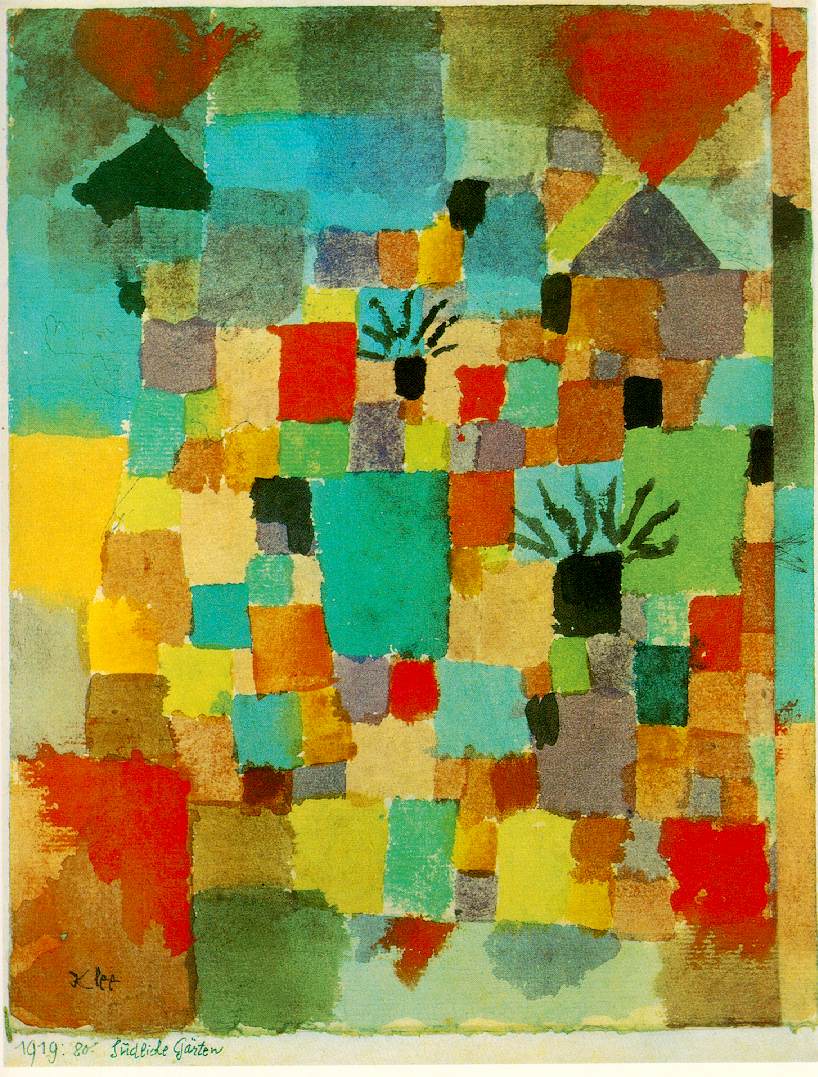
Paul Klee was a friend of Kandinsky and a fellow teacher at Bauhaus. He was known for his mastery in color theory, and his child-like perspective on painting. His work portrays many different styles, and each has its own interpretation.
<http://kathryndarrow.files.wordpress.com/2008/07/kleetunisian-gardens.jpg


The current event on Tillie Tooter is amazing and inspiring. Nine years ago, she flipped off a Florida highway into a swamp, and was trapped in her car for three days without being found. She collected fresh water with her socks and her steering wheel cover, eating a stick of gum, and a cough drop. The crazy thing is that she was 84 years old at the time, and is still alive and kicking today at 93.

Paul Klee is directly associated to architecture by his involvement with Bauhaus, and also related to the Wizard of Oz by his child like perspective, colors, and creativity. Similarly, the era of these to subjects relate. Klee died in 1940 and the film came out in 1939, so that may have been one of the last films he saw in his life. Tillie Tudor was also alive at the time. As a matter of fact, she was 13 at the time that the film came out, so It could have been one of the first films that she saw and remembered. She has also seen the progression that it has made in America.

While Tillie was trapped in her car for three days, she would have had to think about the construction of her car, and if there was any way that she could escape the vehicle, maybe even the safety features put into her car that allowed her to still be alive. All of this relates to the design of making humans comfortable, which is what a part of architecture and design is.

The term, lucarne, may seem that it could not relate in any way, but in this case, the lucarne is a part of Romanesque architecture, which if I recall looks a lot like the city of Oz from a distance. There were also little munchkins singing out of the dormers in Munchkinland. This may seem bizarre or elementary, but to me, it just shows that we can relate anything to architecture. It doesn't mean that all IS architecture, but it can be related to it in some way or another.